Padel borrows tennis scoring and almost nothing else. That is why plenty of people who never got on with tennis take to padel immediately, and why strong tennis players sometimes find their first session more frustrating than they expected.
Here is what actually differs, and what it means on court.
The differences at a glance
| Padel | Tennis | |
|---|---|---|
| Court | 20 × 10 metres, enclosed by walls | Larger, open court |
| Walls | In play after the ball bounces | None |
| Racket | Solid, perforated, no strings | Strung |
| Serve | Underarm, at or below waist height | Usually overhead |
| Format | Almost always doubles | Singles or doubles |
| Scoring | 15, 30, 40, game | Identical |
| Ball | Slightly lower pressure | Standard pressure |
The court and the walls
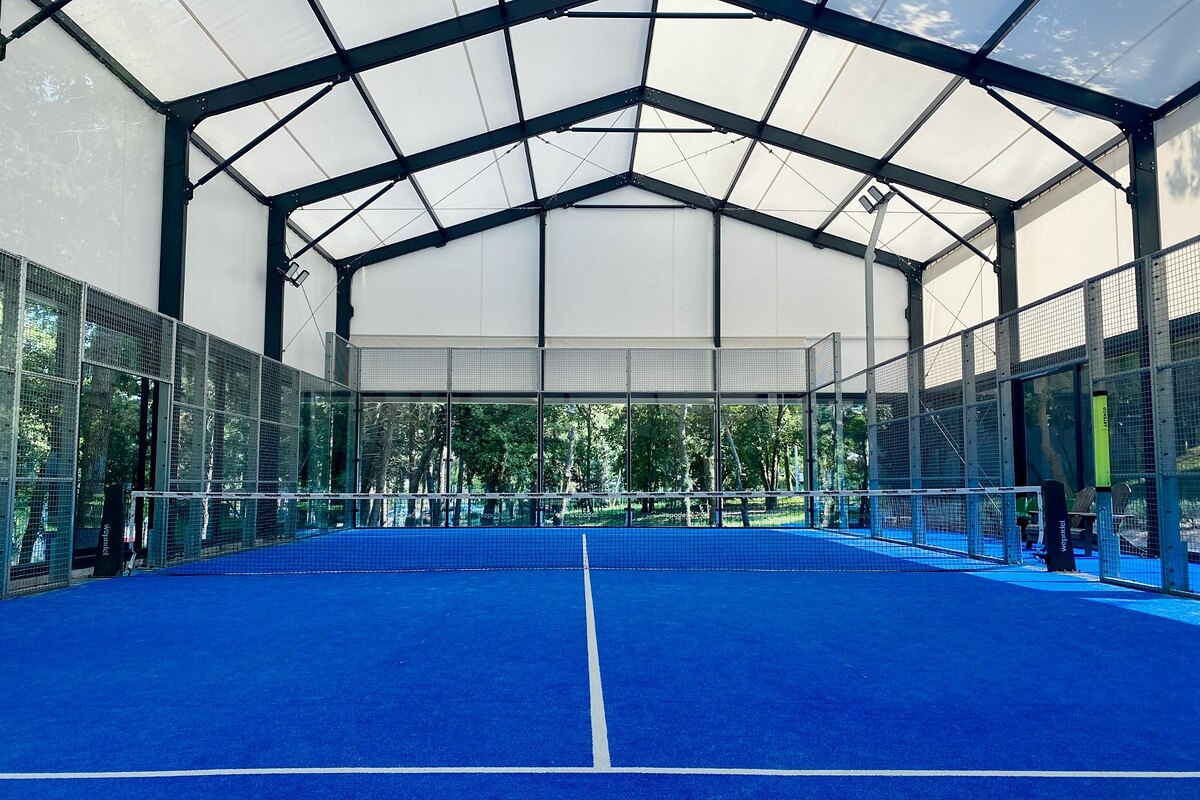
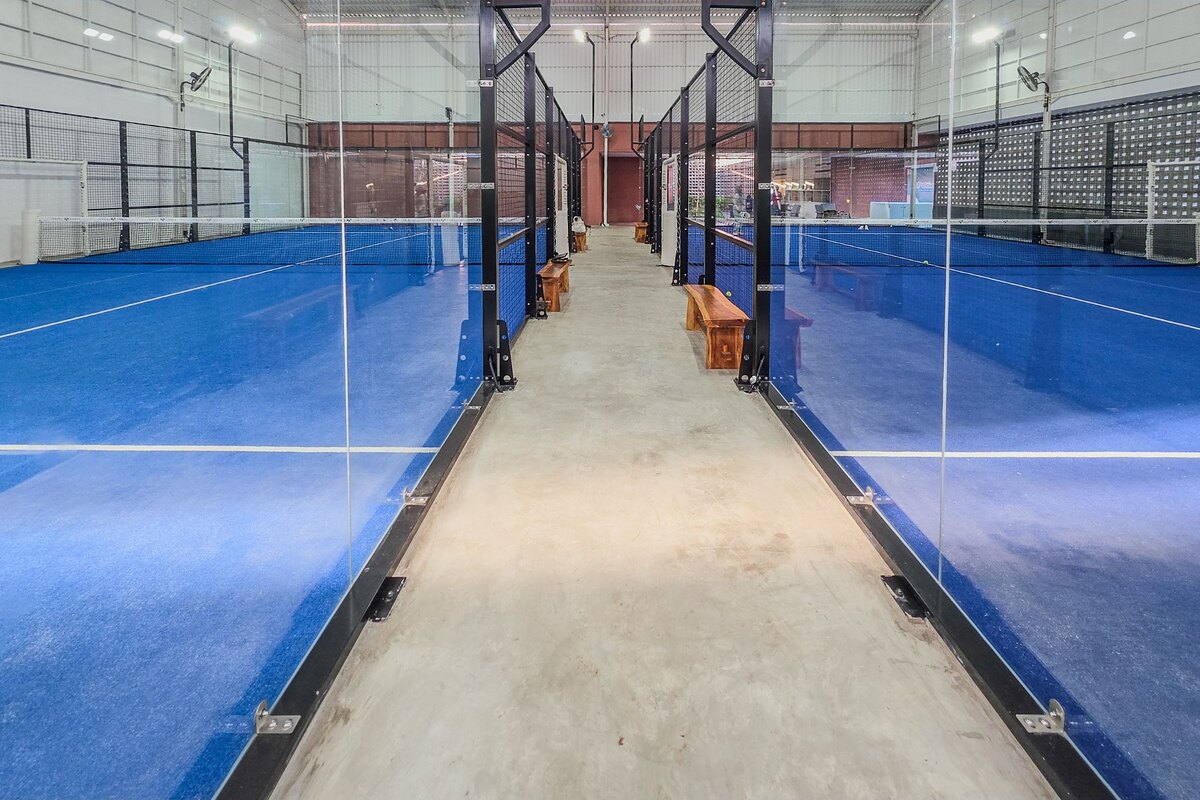
A padel court is about a quarter the size of a tennis court and enclosed on all sides — glass at the back, part glass and part metal mesh down the sides.
The walls are not boundaries. They are part of the playing surface. Once the ball has bounced on the ground on your side, you can let it come off the glass and play it as it returns. You can also hit the ball into your own back wall to loop it over the net.
This one difference changes the character of the game completely. In tennis, a ball past you is a ball gone. In padel it comes back, which means rallies last far longer and a beginner gets vastly more touches per hour. It is the main reason padel is quicker to learn.
The limits: the ball must bounce on the ground before touching your walls, and your shot cannot reach the opponent's wall on the full — that is out.
The racket
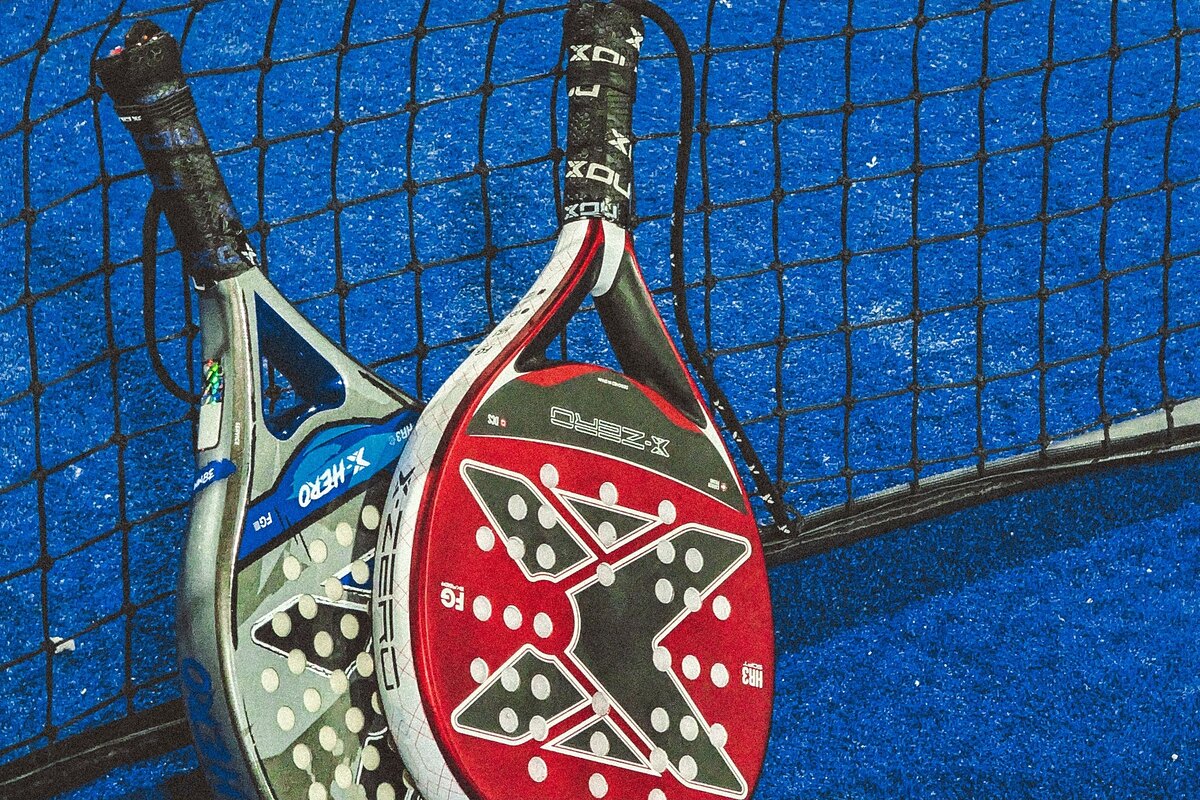
A padel racket is solid, perforated with holes, and has no strings. It is shorter than a tennis racket and has no real sweet spot in the tennis sense.
Two practical consequences. There is nothing to restring, so the running cost is lower. And you cannot generate the same racket-head speed, which means raw power matters less and placement matters more.
The serve
This is the difference that decides how quickly a beginner can start playing.
In padel you bounce the ball behind the service line and strike it at or below waist height, diagonally into the opposite box. Most people can do that correctly inside ten minutes.
In tennis the overhead serve is a genuinely complex movement that takes most adults months to make reliable. Until it works, you cannot start a point.
A couple of padel-specific serve rules worth knowing: the receiver cannot volley the return — the serve must bounce first. And if a served ball bounces correctly in the box and then hits the glass it stays in play, but if it hits the metal fence it is a fault. We go through all of them in padel rules explained for beginners.
Doubles, almost always
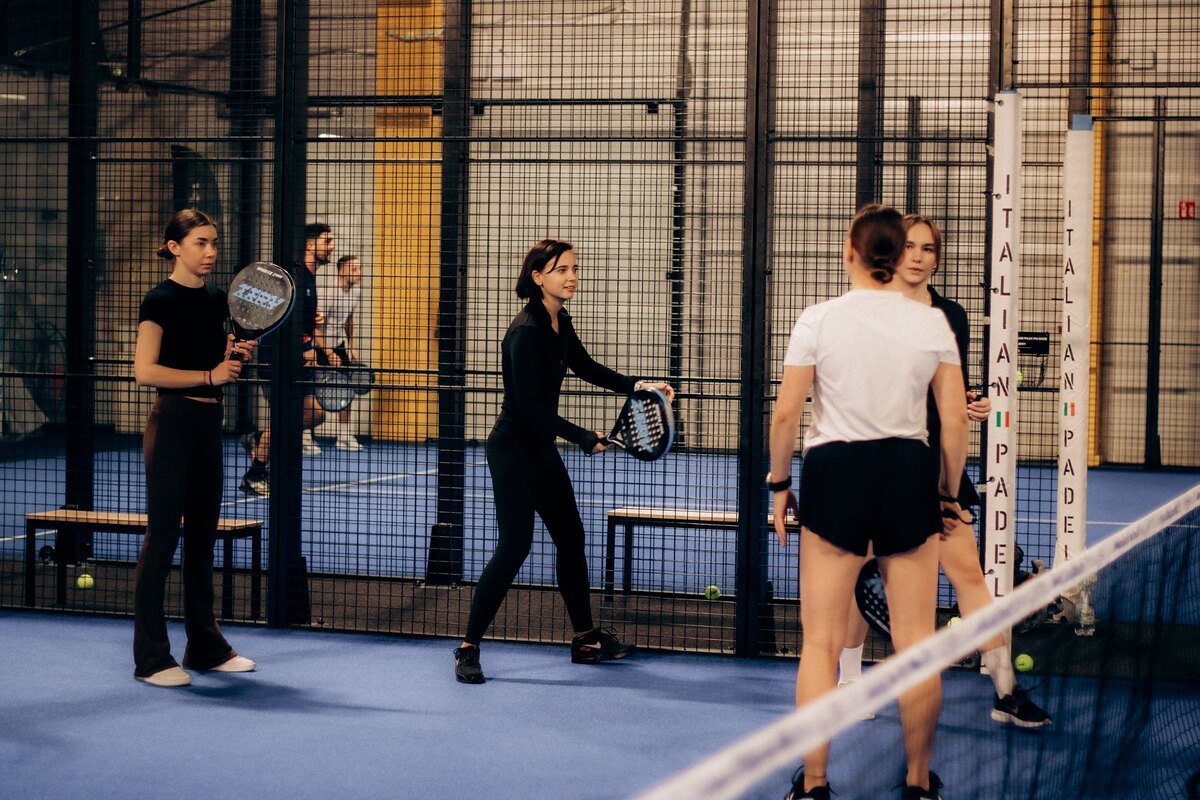
Tennis is played as singles or doubles. Padel is played as doubles, full stop, outside of rare specialist courts.
That matters more than it sounds. You cover a quarter of a tennis court with a partner sharing it, so there is far less running. It also makes mixed-ability play work: an enclosed court keeps rallies alive long enough that a beginner and a regular can have a genuine exchange. In tennis the same pairing is usually one person serving and the other apologising.
Scoring: the one thing that is identical
15, 30, 40, game. Deuce and advantage. Six games to a set, tiebreak at 6–6, best of three.
If you know tennis scoring you need to learn nothing. Some club and social formats use a "golden point" at deuce to keep matches to time, but the base scoring is the same.
What transfers if you already play tennis
Quite a lot, which is why tennis players usually progress fastest overall:
- Hand-eye coordination and timing
- Footwork and split-step
- Volley technique at the net
- Scoring, obviously
- A sense of court position in doubles
What does not transfer
Two specific habits, and both take real effort to unlearn:
Hitting hard. In tennis, pace is a weapon. In padel, the walls recycle your power and hand it back to your opponent. Tennis players tend to overhit for their first few weeks.
Attacking the ball before the wall. Every tennis instinct says to take the ball early. In padel, the correct response to a ball heading for the back glass is often to move back with it, wait, and play it on the way out. This is the single hardest adjustment, and it is why good tennis players sometimes lose their first few games to weaker padel players.
There is also one genuinely new shot to learn: the bandeja, a controlled overhead that keeps you at the net instead of ending the point. It has no real tennis equivalent.
What padel is not
Worth clearing up, because the names get mixed:
- Paddle tennis is a different sport with different courts, rackets and rules
- Pickleball is different again — smaller court, no walls, plastic ball
- Platform tennis is a fourth thing entirely
Padel is the one with glass walls, an underarm serve, and a 20 by 10 metre enclosed court.
So which should you play?
That depends on where you are starting from, and it is a longer answer than it looks — we worked through it in padel or tennis: which should you learn first in the UAE?.
The very short version: if you have never played a racket sport, padel gets you playing real points sooner. If you already play tennis, you are not starting over — expect to be playing competitive points within a session or two.
Trying it
Our courts are at Al Ittihad Private School in Al Safa, Dubai, and Muna British School on Sa'adiyat Street, Abu Dhabi. Every programme starts with a free 45-minute trial, rackets and balls provided.
If you are coming from tennis, say so when you book — we will put you in a group where the crossover is accounted for rather than starting you from absolute zero. Message us with your city and background.
About the author

We coach padel in Dubai and Abu Dhabi — three courts at Al Ittihad Private School in Al Safa, two at Muna British School on Sa’adiyat Street. Beginners, juniors and women-only groups.
More about us →