"How long before I can actually play?" is the question we get most often, and most answers online dodge it.
So here is a direct one. After a single 45-minute session you will be playing points. After about a month of weekly sessions you will be playing recognisable games. After three months you will be a player other beginners want on their team. Padel is unusually fast to pick up, and the reason is structural rather than motivational.
Why padel is quicker than it should be
Three things, all built into the sport.
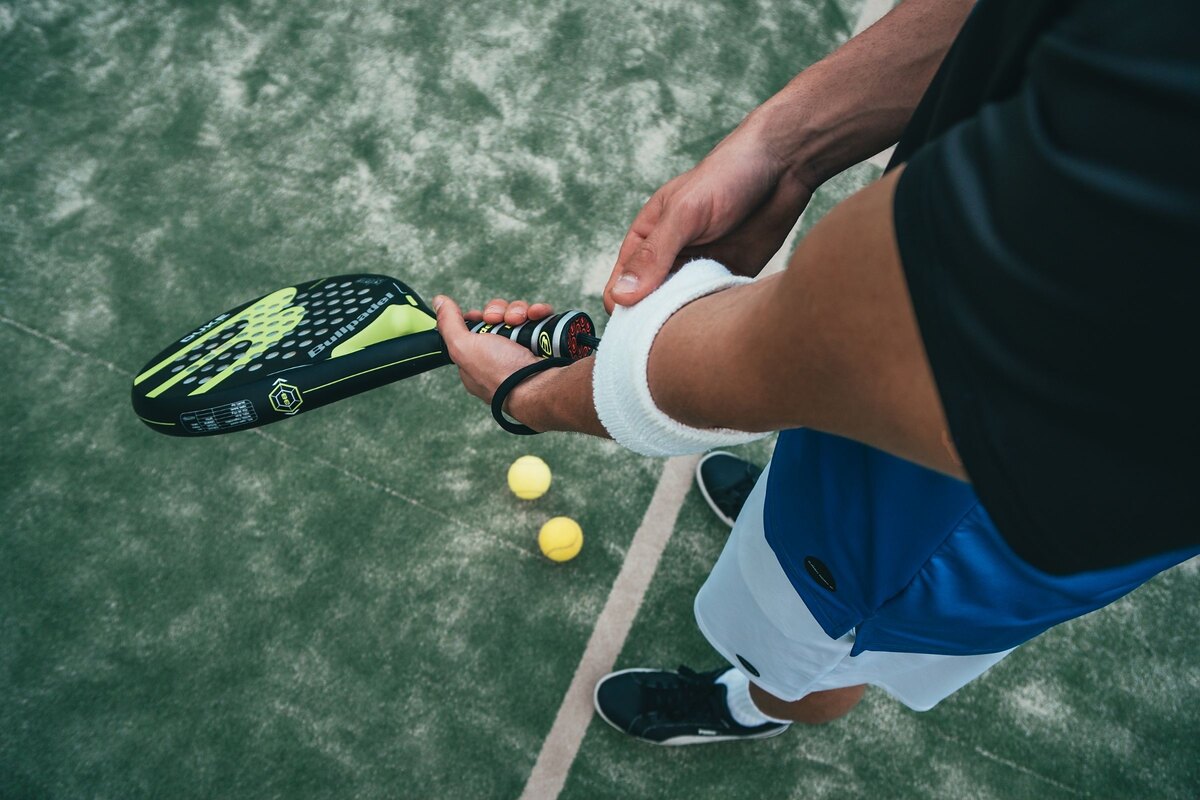
The serve is underarm. You bounce the ball behind the service line and hit it at or below waist height. That is a movement most people can perform correctly within ten minutes. In tennis the overhead serve takes months, and until it works you cannot start a point. Padel removes the single biggest barrier to entry in racket sports on day one.
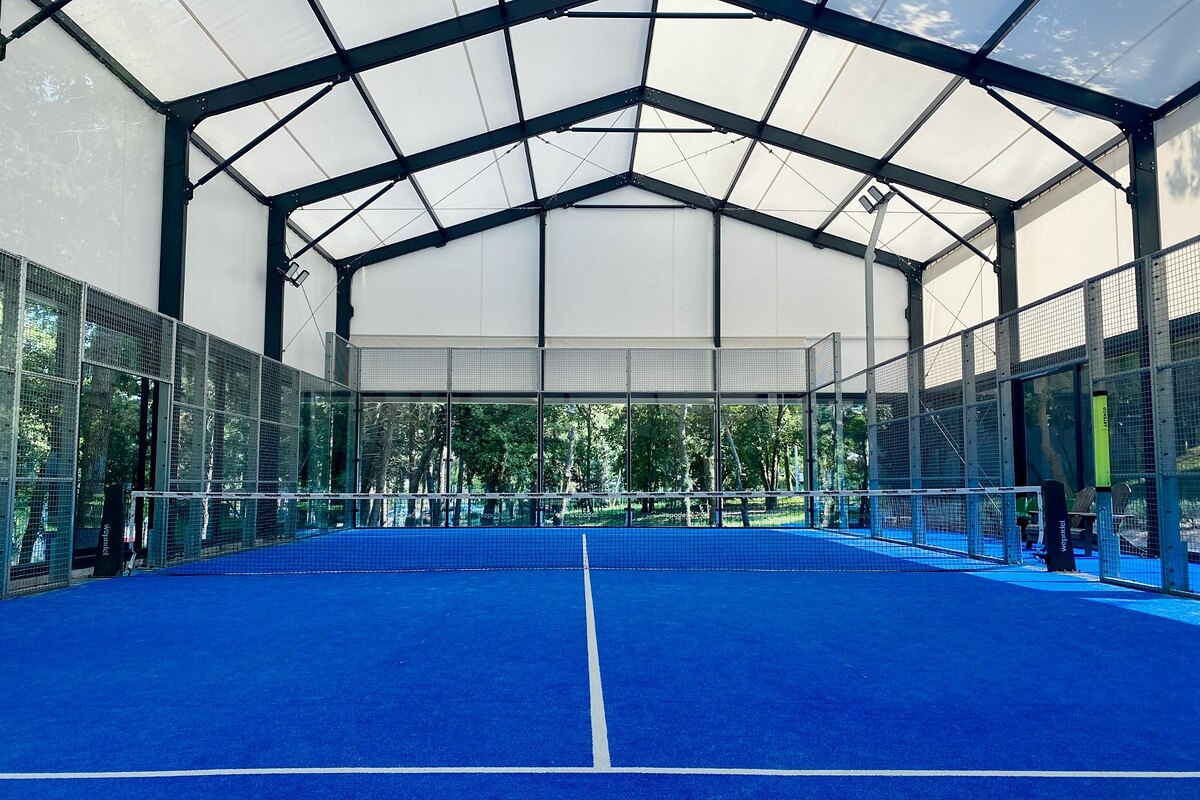
The court is enclosed. Glass at the back, mesh at the sides. A ball that would be gone in tennis comes off the wall and stays in play. Beginners therefore hit far more balls per hour, and the feedback loop that builds skill runs much faster.
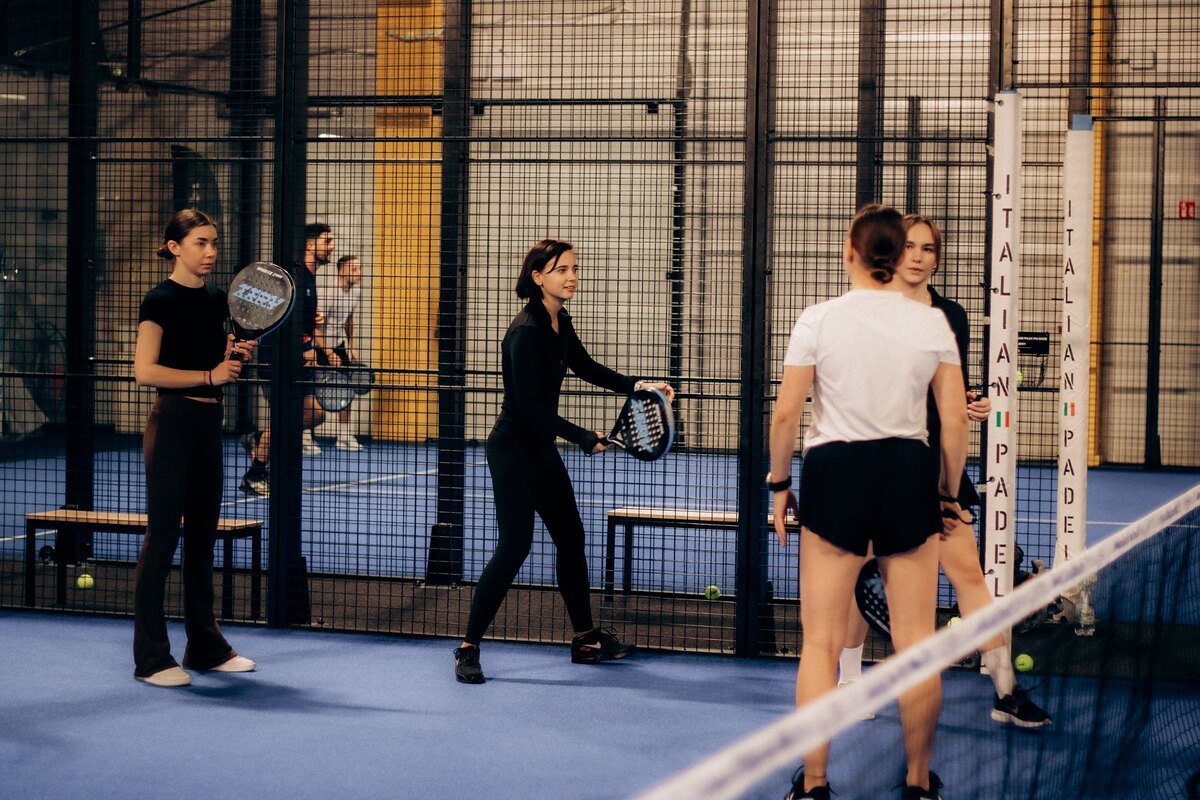
It is always doubles. You cover a quarter of a tennis court with a partner sharing it. Less ground to cover means less running and more hitting, and it means a weaker player is never completely exposed.
We compared the two sports in more detail in padel vs tennis: what is different.
Session one: 45 minutes
By the end of a first session you will have held the racket correctly, served underarm into the right box, rallied, and played points. Not well. But properly — real serves, real rallies, real scoring.
What you will not have is any idea what to do with the back wall. Everyone's instinct is to chase the ball before it reaches the glass. Unlearning that is the project of the next few weeks.
Weeks one to four
A month of once-weekly sessions gets most people to the point where a game between beginners looks like padel rather than like people flailing.
In that window you will usually get:
- A serve you can repeat without thinking about it
- Forehand and backhand that land in court most of the time
- The beginnings of wall play — letting the ball pass you, waiting, and hitting it off the glass
- Enough positioning sense to stop colliding with your partner
Wall play is the one that takes the longest and changes the most. It feels wrong for about three weeks and then suddenly does not.
Months two and three
This is where padel starts being a sport rather than an activity.
You will move to the net deliberately instead of accidentally. You will start learning the bandeja — the controlled overhead that keeps you at the net — which is the first shot that feels genuinely like padel rather than borrowed from tennis. You will begin reading where your opponents are standing instead of just watching the ball.
By three months of weekly coaching, most players can join a social game with regulars and hold their own. That is a reasonable definition of "learned".
What actually slows people down
Not talent. Four things, in order of how often we see them.
Irregular sessions. Once a week consistently beats three sessions in a fortnight and then nothing for a month. Motor skills consolidate between sessions, not during them. If you can only commit to a session every two weeks, it will take roughly twice as long — which is still fine, but worth knowing.
Playing only with much stronger players. Social padel with regulars is enjoyable but you will get two touches a point. Mixing in sessions with people at your own level is how the hours accumulate.
Tennis habits. Tennis players progress fastest overall but hit a specific wall: hitting too hard, and refusing to let the ball come off the glass. Both are instincts to suppress, which is harder than learning something new.
No structure. Turning up to play without ever being corrected means you get fluent at your own mistakes. A grip error that goes unmentioned for two months becomes a habit that takes another two to remove.
That last one is the whole argument for coaching, and we would say that, so weigh it accordingly. But it is also why our coaching programmes are structured as blocks rather than one-off sessions.
How many lessons do you actually need?
There is no fixed number, but a useful frame:
| Goal | Roughly |
|---|---|
| Play a point properly | 1 session |
| Play a full game with friends | 3–4 sessions |
| Hold your own in a social group | 10–12 sessions |
| Use the walls instinctively | 3 months of weekly play |
| Be the better pair on court | a year, give or take |
People progress at different rates and that table is a median, not a promise.
The fastest route
If you want to compress the timeline, the single most effective thing is semi-private coaching — two players sharing a coach. You get most of the individual correction of a private session at a lower cost per person, and you have a partner to practise with between sessions, which matters more than people expect.
Private coaching is faster still. Group classes are slower per hour but cheaper and more sociable, and plenty of people progress perfectly well that way.
The honest answer is that any of them works if you turn up regularly. Regularity beats format.
Start with 45 minutes
Every programme at our Dubai and Abu Dhabi venues begins with a free 45-minute trial, racket included. It is also the quickest way to answer this question for yourself, because by the end of it you will know roughly how fast you pick things up.
Message us with your city and whether you have played any racket sport before, and we will suggest where to start.
About the author

We coach padel in Dubai and Abu Dhabi — three courts at Al Ittihad Private School in Al Safa, two at Muna British School on Sa’adiyat Street. Beginners, juniors and women-only groups.
More about us →